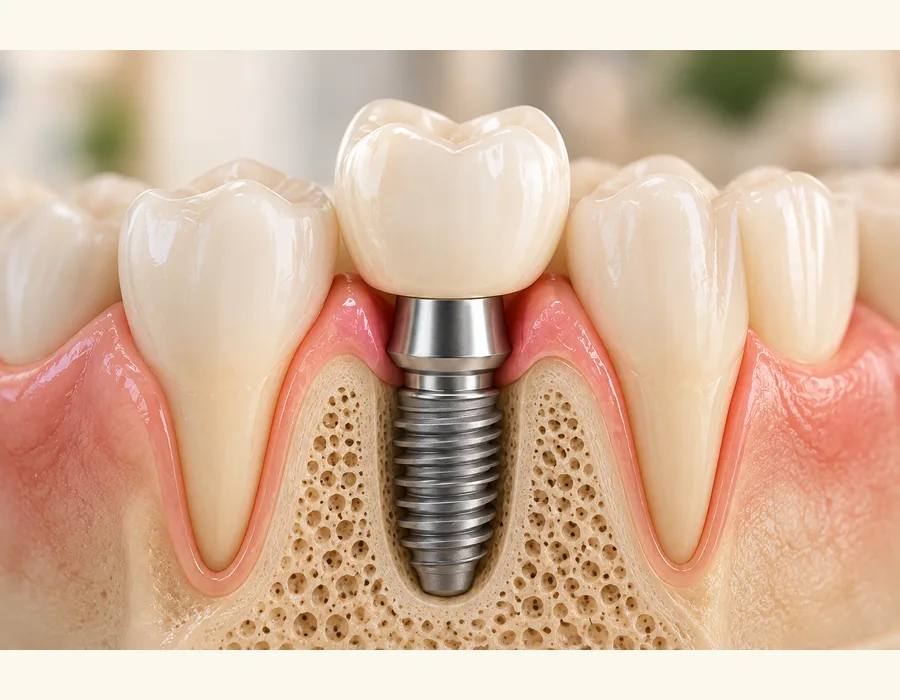
Single-Tooth Dental Implants
An implant-supported restoration for replacing an individual missing tooth.
Implant placement is performed in-house at Hive Dental.
Missing one tooth or several? Hive Dental offers personalized dental implant treatment, including in-house implant placement and advanced 3D imaging, at our Fresno dental office near Missouri City and Sienna.
Consultation is free. Additional imaging or treatment may involve fees, which we’ll explain before you proceed.
12125 Highway 6, Suite D, Fresno, TX 77545
Online requests are not confirmed appointments until our office responds.

Replacing a missing tooth can make it easier to bite and chew a wider range of foods.
A custom crown or bridge is shaped and shaded to blend with the teeth around it.
Gaps in the front of the mouth can change how some sounds form. Replacement may help.
Teeth can drift toward a gap. Filling it may help keep your bite more balanced.
Open spaces can trap food and shift neighboring teeth. Replacement can reduce some of these issues.
An implant places a post in the bone, which can help support it in ways a removable appliance cannot. It does not completely prevent bone loss.
Implants do not guarantee improved health or completely prevent bone loss. Individual results vary.
Anatomy
A dental implant is a tooth-replacement option designed to look, feel, and function like a natural tooth. It consists of three main components that work together.
A biocompatible fixture placed into the jawbone to support a restoration.
A connecting component between the implant and restoration when required by the system.
A custom restoration designed to replace the visible portion of a missing tooth.
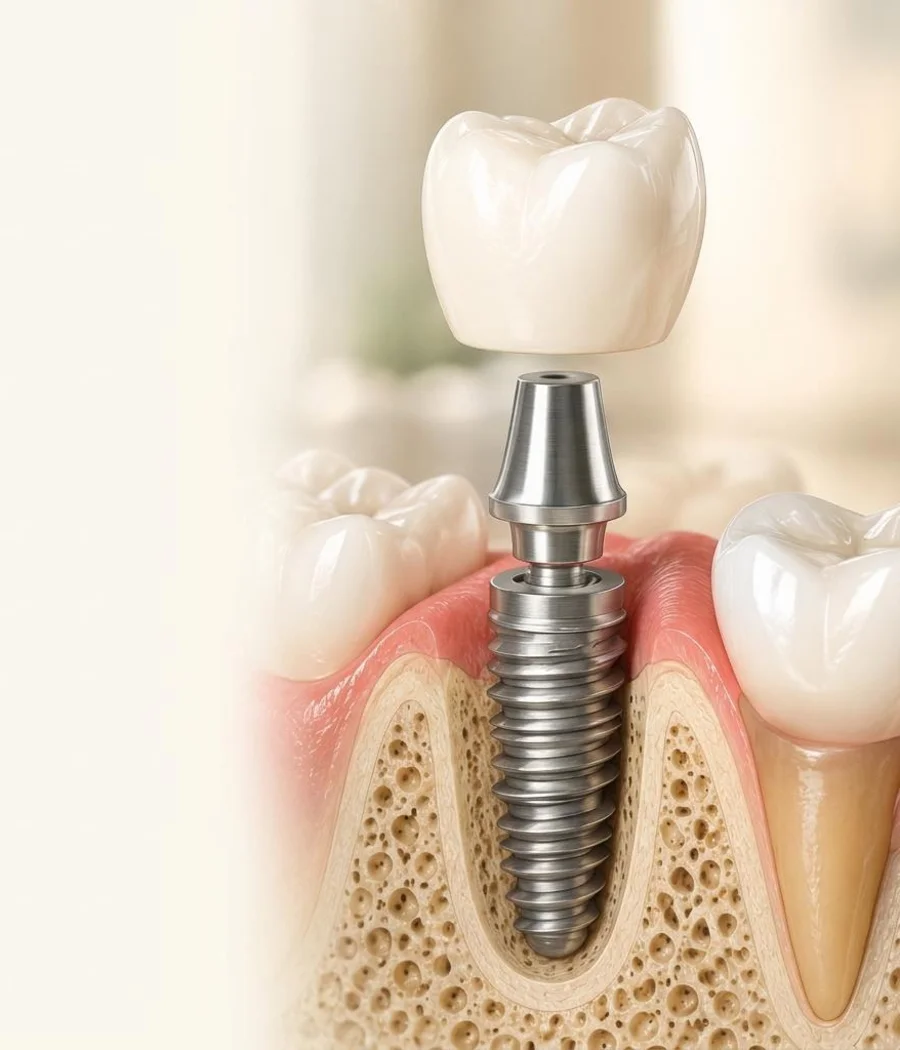
Dental crown
A custom restoration designed to replace the visible portion of a missing tooth.
Abutment
A connecting component between the implant and restoration when required by the system.
Implant post
A biocompatible fixture placed into the jawbone to support a restoration.
A single dental implant may replace a missing tooth without reshaping neighboring teeth.
Ask which tooth-replacement options may help restore your chewing function and smile.
Ask whether implant-supported treatment may be an appropriate option for improving denture stability.
An examination helps determine which options suit your oral health, bone, and goals. Our team will explain which treatments are available at Hive Dental.
Here is how implant-supported tooth replacement can work. Not every design is offered at every practice, and we will be clear about what Hive Dental can provide.
An implant-supported restoration for replacing an individual missing tooth.
Implant placement is performed in-house at Hive Dental.
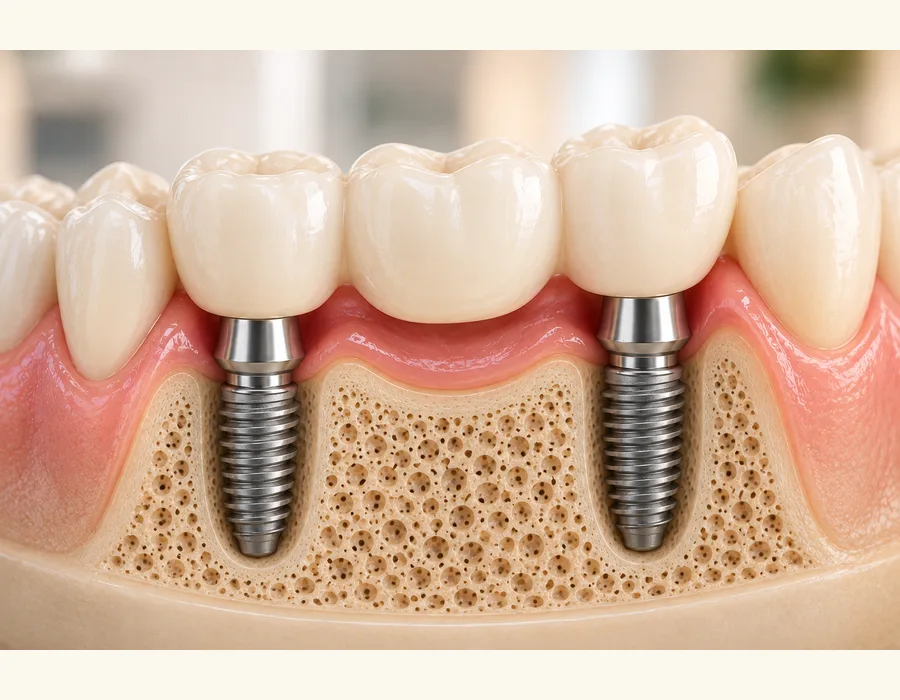
Implant-supported bridges or other restorative options, depending on clinical needs.
Educational overview. Clinical availability at Hive Dental needs confirmation.
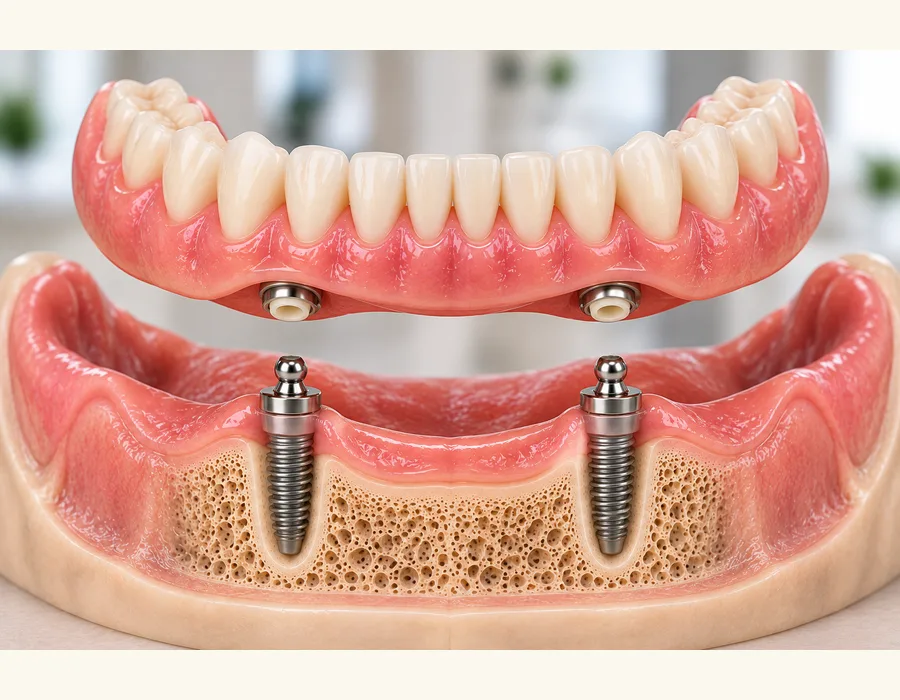
An option that may improve denture retention and stability.
Educational overview. Clinical availability at Hive Dental needs confirmation.
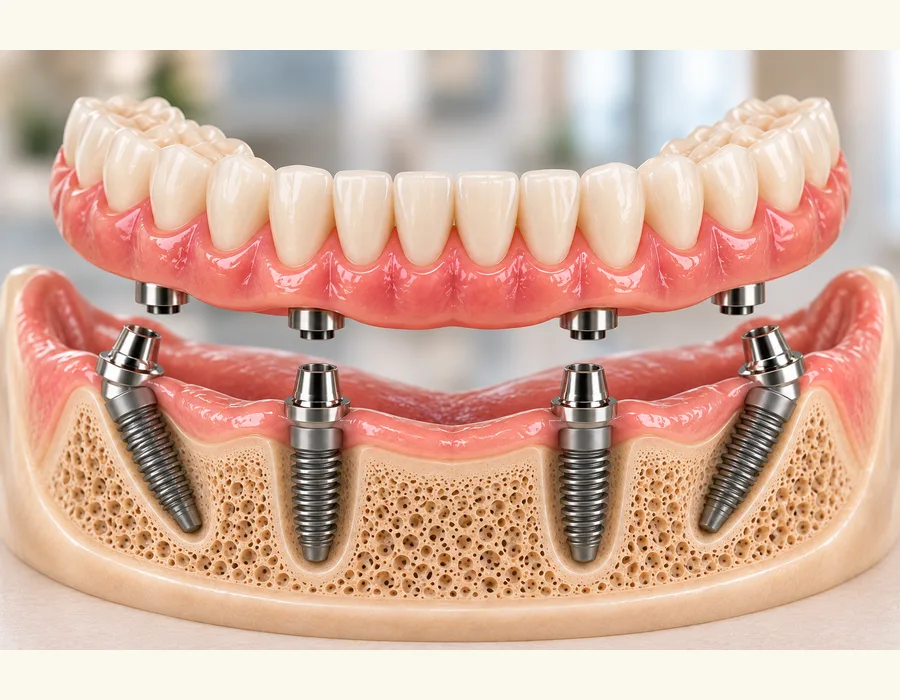
A full-arch implant-supported restoration is a potential option for people missing most or all of their teeth.
Educational overview. Clinical availability at Hive Dental needs confirmation.
| Topic | Dental implant | Fixed bridge | Denture |
|---|---|---|---|
| General approach | A post in the jaw supports a crown, bridge, or other restoration. | Crowns on neighboring teeth hold a replacement tooth in the gap. | A removable appliance rests on gums, or on implants in some designs. |
| Removability | Fixed restorations are not removed at home. Some designs are removable. | Fixed. Not removed at home. | Usually removable for cleaning and sleep. |
| Adjacent teeth | Neighbors generally are not reshaped. | Neighboring teeth are usually reshaped to hold crowns. | May clasp onto remaining teeth. |
| Cleaning and maintenance | Brushing, flossing aids, and regular professional checks. | Special floss tools are needed under the bridge. | Daily removal and cleaning, plus periodic fit checks. |
| Surgical requirements | Surgical implant placement is required. Complexity varies by case. | A conventional bridge does not need implant surgery; other preparatory care may be needed. | Conventional dentures do not need implant surgery, but extractions or other care may be needed. |
| Bone considerations | Needs enough healthy bone, or preparatory work may be discussed. | Does not require an implant site, but supporting teeth and gums must be healthy. | Fit can change as gums and bone change over time. |
| Typical timeline | Often several months. Healing varies by patient. | Often a few visits. | Often a few visits, with adjustments afterward. |
| Cost considerations | Higher upfront cost for some cases. Long-term needs differ. | Moderate. May need replacement over time. | Often lower upfront. Relines or replacements may follow. |
| Suitability | Good health, healing capacity, and adequate bone help. | Healthy neighbors that can support crowns. | May suit people who prefer to avoid surgery or have limited bone. |
Dental implant: A post in the jaw supports a crown, bridge, or other restoration.
Fixed bridge: Crowns on neighboring teeth hold a replacement tooth in the gap.
Denture: A removable appliance rests on gums, or on implants in some designs.
Dental implant: Fixed restorations are not removed at home. Some designs are removable.
Fixed bridge: Fixed. Not removed at home.
Denture: Usually removable for cleaning and sleep.
Dental implant: Neighbors generally are not reshaped.
Fixed bridge: Neighboring teeth are usually reshaped to hold crowns.
Denture: May clasp onto remaining teeth.
Dental implant: Brushing, flossing aids, and regular professional checks.
Fixed bridge: Special floss tools are needed under the bridge.
Denture: Daily removal and cleaning, plus periodic fit checks.
Dental implant: Surgical implant placement is required. Complexity varies by case.
Fixed bridge: A conventional bridge does not need implant surgery; other preparatory care may be needed.
Denture: Conventional dentures do not need implant surgery, but extractions or other care may be needed.
Dental implant: Needs enough healthy bone, or preparatory work may be discussed.
Fixed bridge: Does not require an implant site, but supporting teeth and gums must be healthy.
Denture: Fit can change as gums and bone change over time.
Dental implant: Often several months. Healing varies by patient.
Fixed bridge: Often a few visits.
Denture: Often a few visits, with adjustments afterward.
Dental implant: Higher upfront cost for some cases. Long-term needs differ.
Fixed bridge: Moderate. May need replacement over time.
Denture: Often lower upfront. Relines or replacements may follow.
Dental implant: Good health, healing capacity, and adequate bone help.
Fixed bridge: Healthy neighbors that can support crowns.
Denture: May suit people who prefer to avoid surgery or have limited bone.
Each option can work well. Implants are not always the best choice, and the right answer depends on your health, bone, budget, and goals.
Every plan is individual. Steps, spacing, and healing time vary by patient.
Discuss missing teeth, smile goals, medical history, and treatment concerns.
Evaluate oral health, bone anatomy, and implant suitability. We use CBCT when clinically indicated.
Review treatment options, estimated costs, and whether preparatory procedures may be necessary.
When appropriate, the implant is placed in-house at our Fresno office. We explain each part of the visit beforehand.
The implant and bone need time to bond, called osseointegration. Healing time varies by patient.
When appropriate, the crown, bridge, or other implant-supported restoration is completed.
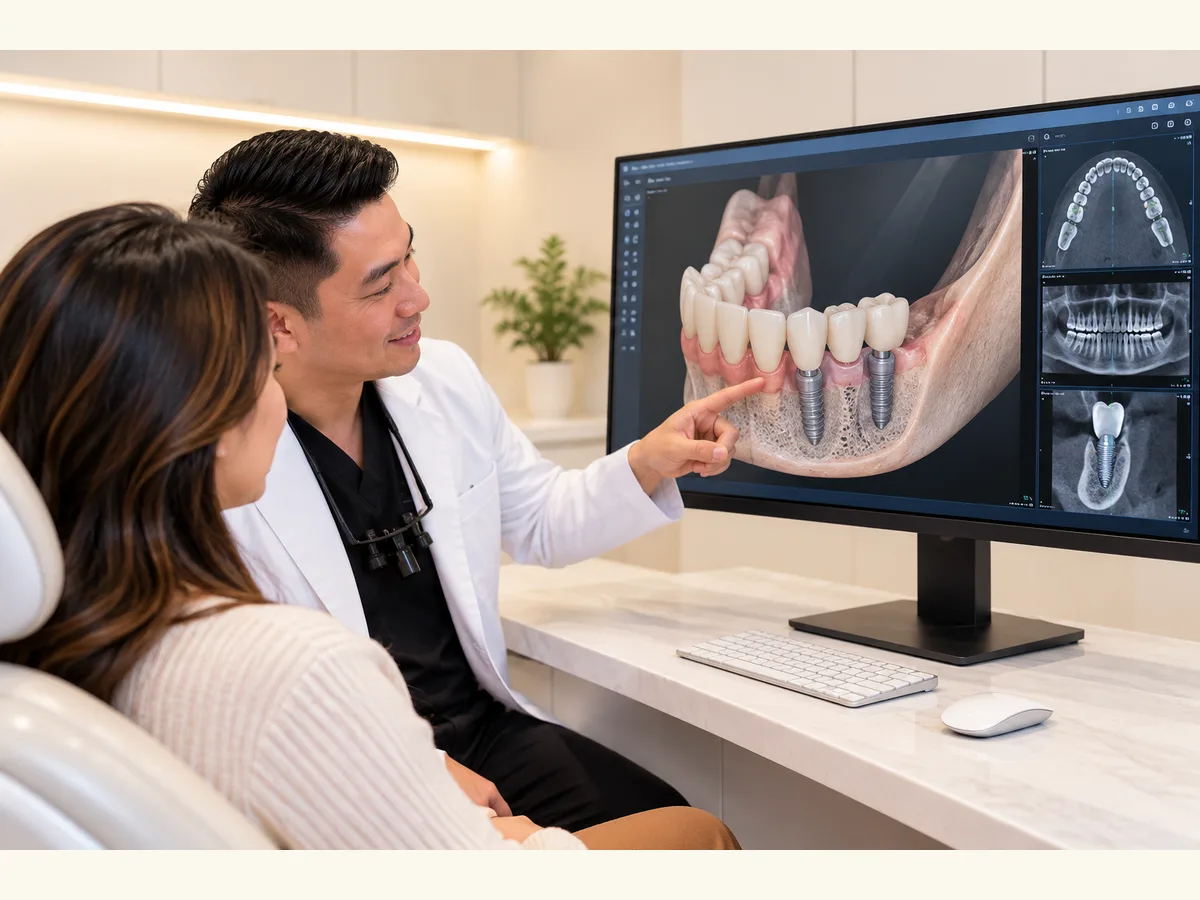
CBCT imaging can help your dentist evaluate bone anatomy and plan where an implant may be placed. It is used when clinically indicated. It is not necessary for everyone and does not guarantee an outcome.
There is no single price, because each plan is different. Cost depends on:
Ask our team about available financing options and payment arrangements for eligible patients. Insurance coverage is not guaranteed.
A dental implant is a small biocompatible post placed in the jawbone to support a replacement tooth or teeth. It is usually paired with an abutment, when the system requires one, and a custom crown, bridge, or other restoration.
Candidacy depends on your oral health, gum condition, bone anatomy, medical history, and habits. Many adults are candidates, but only an examination can tell. Some people need preparatory treatment first, and some are better served by another option.
Cost depends on the number of implants, implant system and materials, restoration type, any bone grafting or preparatory care, imaging needs, case complexity, and insurance benefits when applicable. We do not post a single price because every plan differs. After your evaluation, our team reviews estimated costs with you.
Comfort varies from person to person. The area is numbed for placement, and our team talks through comfort options with you beforehand. Some soreness, swelling, or tenderness afterward is common, and we give written aftercare guidance.
There is no single timeline. Treatment generally includes planning, placement, a healing period while the implant integrates with bone, and then the final restoration. Healing and any preparatory procedures vary by patient, so we give you an individualized outline after evaluation.
Many implants function well for many years, but no one can promise how long yours will last. Longevity depends on oral hygiene, gum health, bite forces, smoking, medical conditions, and regular dental visits. The crown may need repair or replacement sooner than the implant itself.
Yes, implants can support bridges or other restorations for several teeth, and sometimes one implant does not need to replace each tooth. Which design suits you depends on clinical needs. Clinical availability of multiple-tooth, supported-denture, and full-arch treatment at Hive Dental needs confirmation, and we will tell you plainly what we can provide in-house.
Bone loss does not automatically rule out implants. Your dentist reviews bone height and width, often with 3D imaging when clinically indicated, and discusses whether preparatory procedures, a different design, or another tooth-replacement option makes more sense.
Not everyone does. Whether grafting or another preparatory step is useful depends on your bone anatomy and the planned implant position. We explain the reason for any recommendation, along with alternatives, before you decide.
Cone beam computed tomography (CBCT) is a 3D X-ray that shows bone, teeth, and nearby structures from many angles. It can help evaluate bone anatomy and plan implant placement. It is used when clinically indicated, not for every patient, and it does not by itself guarantee an outcome.
Not always. A fixed implant-supported restoration can offer stability without resting on the gums, but implants involve surgery, healing time, and higher upfront cost in some cases. Conventional dentures may avoid implant surgery and may cost less initially; preparatory care can still be needed. Some implant-supported dentures remain removable. The better choice depends on your health, bone, budget, and preferences.
Coverage varies widely. Some plans cover parts of treatment such as crowns, extractions, or imaging, while others exclude implants or apply waiting periods and annual limits. Coverage is not guaranteed. Our team can help you understand your benefits.
You go home with written instructions covering rest, diet, oral hygiene, and medications if prescribed. Mild swelling and tenderness are common. We schedule follow-up visits to check healing before the final restoration. Call us if something feels wrong.
Brush twice daily, clean between teeth with floss or interdental brushes as recommended, and keep regular exams and cleanings. Plaque around implants can inflame gums and affect supporting bone, so thorough home care and professional monitoring both matter.
Smoking can slow healing and raise the risk of implant complications, so it is part of the discussion. It does not always rule out treatment. We review your history candidly and may recommend reducing or stopping tobacco before and after placement.
We talk through the teeth you are missing, your goals, health history, and concerns. We examine your mouth and may recommend imaging, including CBCT when clinically appropriate. You then hear which options may fit, what preparatory care might be needed, and what the estimated costs look like. Requesting a consultation is not a confirmed appointment until our office responds.
Hive Dental has one office, at 12125 Highway 6, Suite D, Fresno, TX 77545. We welcome patients from nearby communities including Missouri City, Sienna, Riverstone, Sugar Land, Pearland, Arcola, Manvel, and Rosharon, but we do not have offices in those areas.
Looking for an implant dentist near you, or comparing tooth replacement options in the Riverstone area? Hive Dental has one physical office, on Highway 6 in Fresno. We welcome patients from nearby communities, but we do not have offices in those areas.
Learn more: Family dentistry in Fresno, New patient information, Insurance and payment information, Invisalign in Fresno.
Request a consultation and our Fresno team will follow up. Online requests are not confirmed appointments until our office responds.
12125 Highway 6, Suite D, Fresno, TX 77545